
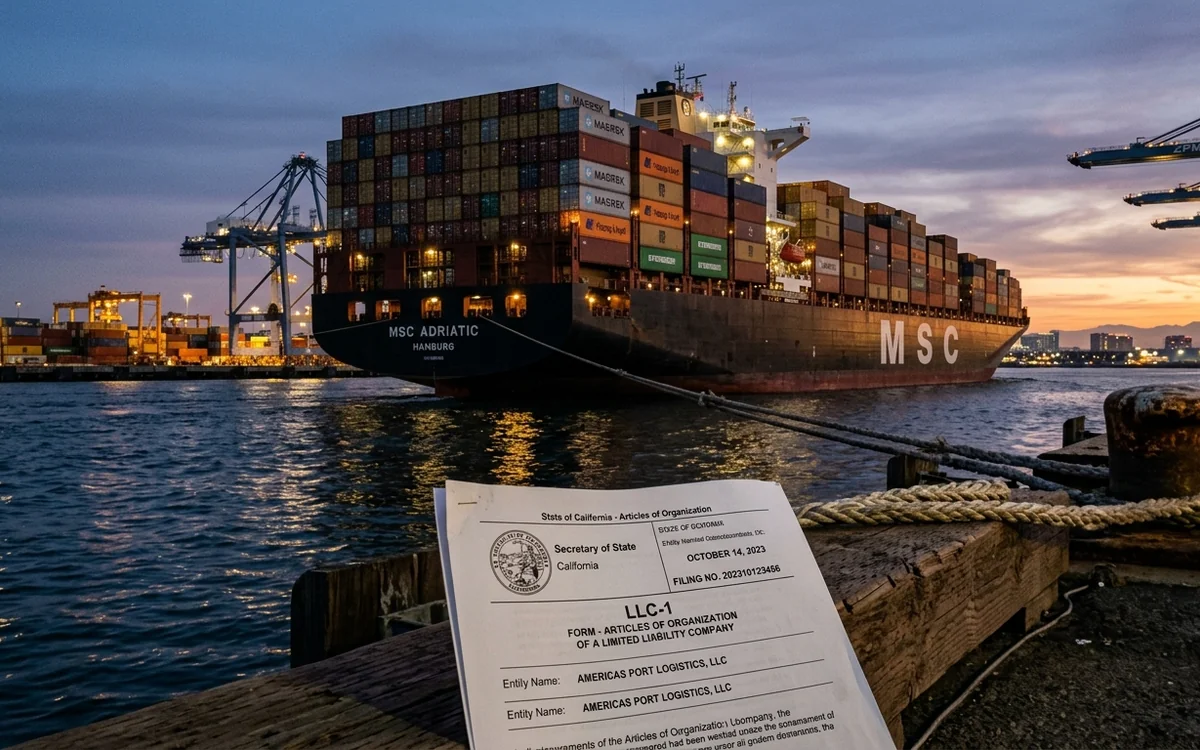
An LLC Doesn't Cancel Duties. It Never Did
Let's start honestly. If a product was manufactured in China, Vietnam, Turkey or anywhere else, the mere fact that you've registered a US company doesn't make that product American. Customs looks at the country of origin, the HTS code, the importer of record, the product category, the route, and the tariffs that actually apply.
But a US company changes something else: it gives the entrepreneur infrastructure to manage imports, sales, warehousing, payments, contracts and compliance inside the US. These are two different things — bypassing duties versus having an operational base. The rest of this article is about why the second one became important.
What Happened with Tariffs in 2026
On February 20, 2026, the US Supreme Court in Learning Resources, Inc. v. Trump, by a 6–3 vote (opinion by Chief Justice Roberts), held that the President cannot use IEEPA as a basis to impose broad tariffs. SCOTUS invalidated two sets of tariffs — those against Canada, Mexico and China (based on a declared "narcotics" emergency) and those against the rest of US imports (based on the trade deficit).
It was a major legal moment. But the question of refunding the roughly $200 billion in tariffs already collected was left open by the Court — and for businesses that didn't mean "tariffs are gone."
The Administration immediately switched to other legal vehicles. The principal IEEPA replacement is Section 122 of the Trade Act of 1974, which authorizes temporary tariffs. Section 232 (national security) and Section 301 (unfair trade practices) are also in use. For businesses, this created not stability but a new uncertainty: the legal basis changed, the import burden stayed.
Today an entrepreneur can't just say: "I read the news, the rate is X." For one and the same product the bottom line depends on country of origin, category, HTS code, date of entry, route, documentation and who is the importer of record. For e-commerce this is especially painful — margins on Amazon and online stores often hinge on a few percentage points, and a sudden shift in shipping, duty or fees can flip the whole model into unprofitable.
The End of De Minimis: A Separate but Related Hit
In parallel with the tariffs, the US fully ended de minimis — the $800 threshold below which imports could enter without a standard customs duty (legal basis: Section 321 of the Tariff Act). For China and Hong Kong that happened on May 2, 2025; for all other countries — on August 29, 2025. The February SCOTUS decision didn't restore de minimis; on February 24, 2026 a presidential executive order extended the suspension for all countries.
For international sellers who used to ship small parcels directly to US customers, the model broke. Every such parcel now goes through formal entry with full duty. According to Marketplace, the volume of sub-$800 parcels from China fell by roughly 54% after May 2, 2025 — that's the size of the shift, not a small correction. If your business was built on cheap direct shipments, we covered that in a separate article: "End of Cheap Parcels: How the De Minimis Repeal Changed US E-commerce".
Why It Hits International Sellers Hardest
For years many entrepreneurs ran a simple loop: find a Chinese manufacturer, ship product to the US, sell through Amazon, Shopify or marketplaces.
While logistics were predictable and small parcels could enter the US with minimal cost, the model worked. When the rules started moving, the weak spots became obvious.
Foreign sellers often don't have a full US operational structure. No US company that can be a counterparty in contracts. No proper US business bank account. No clean accounting. No systematic record of import documentation. No stable relationships with 3PLs, customs brokers, suppliers, insurers or payment processors.
While the business is small, this seems unimportant. But once tariffs, returns, audits and questions from Amazon, customs, the bank or the payment processor show up — the entrepreneur realizes: they're selling on the US market but don't have a US operational base.
So Why Do People Open a US Company
Not to "bypass tariffs." That's a dangerous and incorrect framing.
A US company is opened to restructure the business model.
A US company helps you:
- be a counterparty in contracts with US partners;
- open a business bank account and connect payment tools;
- work with Amazon, Walmart, Shopify, Stripe, PayPal and other platforms;
- enter contracts with 3PL warehouses and fulfillment centers;
- track supplies, duties, COGS and margin properly;
- work with customs brokers and logistics providers;
- manage sales tax, nexus and tax obligations;
- gradually build credit and business history in the US.
It's not magic. It's infrastructure. When rules change, the winners aren't the loophole-hunters — they're the people with a system. Tariffs go up — they recalculate the unit economics. The supply route changes — they update logistics. Amazon requests documents — they can provide them. They need to import in batches and warehouse in the US — they already have a company, a bank account, contracts and accounting.
What Changed in Entrepreneurs' Behavior
People used to ask: "Can I postpone opening a company? I just want to test sales." Now the question sounds different: "What structure do I pick so I can operate in the US without redoing everything six months later?"
The focus moved from "open a company for the badge" to "build an operating model for the US market":
- which state to register in;
- where nexus arises;
- whether a sales tax permit is needed;
- who is the importer of record;
- how duties are accounted for in COGS;
- how to work with 3PL or Amazon FBA;
- how to separate personal and business finances;
- how to prepare documents for the bank, the payment processor and tax filings.
By the way, state choice is its own fork. Many people pick Delaware on autopilot because "that's what everyone does." For a VC-backed startup that's often right. For an Amazon seller, far from always. There's a separate piece on that: "Delaware Isn't a Mistake. The Mistake Is Opening a Delaware Company Without Knowing Why".
The Mistake You Can't Afford
The main mistake is selling company registration as a way to avoid duties.
That's wrong. Duties depend not on whether you have an LLC but on the product, the country of origin, the customs code and the active rules.
The right framing is different: if you sell or plan to sell in the US, you need a structure that survives the next change. A company, a bank account, accounting, documents, contracts, tax logic, an understanding of nexus and sales tax — all of this becomes part of the business's defense.
What an Entrepreneur Should Do
If you sell in the US or are entering the market, don't start with "where is the cheapest LLC?" — start with an analysis of the business model:
- where the product comes from;
- who manufactures it;
- what the country of origin is;
- what the HTS code is;
- who will be the importer of record;
- where the product will be warehoused;
- which platforms you'll sell through;
- in which states nexus may arise;
- which taxes, duties and fees will hit the margin.
Only after that do you pick the state, the entity type, the tax model and the operational setup.
Walk through your business model before registration? → book a consultation
On the call with Edeal's CPA and business attorney we'll go through your situation: state, entity type, importer of record, sales tax, nexus, and unit economics after the new tariffs. More: US company formation and support.
Bottom Line
Tariffs didn't make registering a US company trendy. They made it more practical.
For international e-commerce, a US company is no longer just a nice line in the paperwork. It's part of the system that lets you import, warehouse, sell, pay taxes, keep accounting and adapt to rule changes — like a grown-up business.
The key thing: don't open a company blind. Opening one in the US is easy. Fixing one that was opened the wrong way is expensive.
Rebuild e-commerce for the US market in 2026?
At Edeal we have a CPA and a business attorney. We help pick the state, the entity type (LLC or Corp), set up the importer of record, open a US business bank account, handle sales tax and nexus, and build an operating model that survives the next change of rules.
Sources:
· Supreme Court of the United States — Learning Resources, Inc. v. Trump (opinion, February 20, 2026)
· The White House — Executive Order "Continuing the Suspension of Duty-Free De Minimis Treatment for All Countries" (February 24, 2026)
· Marketplace — report on the drop in sub-$800 parcel volume from China (March 3, 2026)
· 19 U.S.C. § 1321 — Section 321 of the Tariff Act, the de minimis legal basis
· 19 U.S.C. § 2132 — Section 122 of the Trade Act of 1974, the basis for temporary tariffs after the SCOTUS ruling